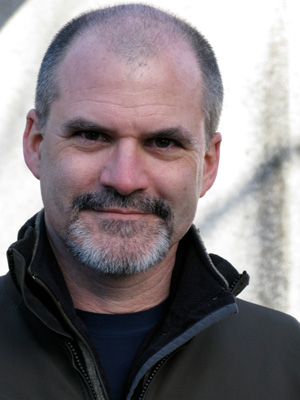
#168 – CUSTOMERS EXPERIENCE PRODUCT RELIABILITY IN REAL TIME – FRED SCHENKELBERG

Featured

ABC FredIn a customer’s mind, the product works or it doesn’t. If it doesn’t work as expected it has failed. This may or may not be a reliability problem.

A customer or someone using your product brings a set of expectations to the experience. The range of expectations may range from very little to very high functional, value production, and durability.

Failures are defined by customers. Continue reading

#168 – THE PM CONSULTANT – WHAT DO THEY DO (& WHY); BUT WHAT SHOULD THEY DO(& HOW)? – MALCOLM PEART

Featured

Malcom-Peart-pixThe PMC Role

In a nutshell, many people think that the role of the Project Management Consultant (PMC) is to look after the Client’s best interests.  But what are the Client’s best interests and does this just amount to keeping the Client happy and not upsetting him?

I would suggest that completing the project in terms of time, cost and quality prevail and that this is the PMC’s real role. This requires the PMC to let the Client know that his best interests are (1) being met, (2) not being met, (3) what needs to be done to meet those interests, and (4) explain why the Client needs to pay or be delayed, or fail. Continue reading

#168 – 800COMPETE.COM – NEW SUPPLY MANAGEMENT BUSINESS MODEL – GREG HUTCHINS

Featured

Greg HutchinsThe Challenge

Think of the following: your CEO gets a tweet from President Trump calling out your company for being Un-American for offshoring jobs? No!

“The biggest idea (globalization/offshoring) of the past three decades is in deep trouble,” says the Economist

President Trump advocates critical infrastructure spending to build/upgrade the electric grid, roads, and airports. The American Society of Civil Engineers (ASCE) rates the infrastructure D+. Domestic investment will be $1 up to $4 trillion. Most of the infrastructure will be sourced domestically. Continue reading

#167 – THE RISK OF FALSE DEMAND – STEVEN BRADT

Featured

steven bRisk of False Demand

When organizations consider risk it is usually centric to mitigating sentinel events or Black Swans (Special Cause) and not usually focused on what is called common cause variation.  By definition these special cause events have a low probability to predict because it is a random from an unusual occurrence and is unstable and unpredictable.  Common cause or process variation is stable and predictable as it is part of the system which means we can identify and reduce variation which reduces risk. Continue reading

#167 – RISK EXPOSURE REDUCTION AND MITIGATION – GEARY SIKICH

Featured

Untitled1-150x150Exposure to threats, hazards and risks leads to vulnerabilities that an organization must deal with.  Commonly these are addressed via a mitigation process.  Once mitigation is accomplished, often times the organization feels that the risk, threat, hazard does not need to be revisited.  However, as a result of the mitigation efforts on the part of the organization, the risks, threats, hazards reconfigure and re-emerge in a different form.  Continue reading