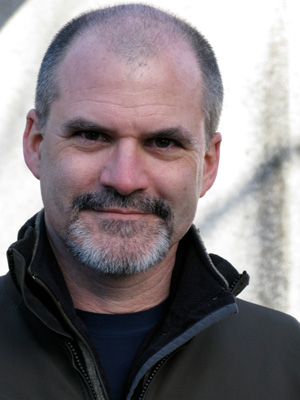
Empowering employees to speak up when they see something that is wrong or when they are asked to do something that might cause harm is critical to the survival of all organizations. Each employee needs to internalize their own personal accountability for the actions they take under executive leadership. Continue reading
Author Archives: greg
#139 – STAR ACADEMICS: DO THEY GARNER INCREASING RETURNS? – JAMES KLINE PH.D.
Featured
I recently completed my dissertation of the same title. The evaluative purpose of the dissertation was twofold. The first was to determine if, as the title indicates, star academics garner increasing returns for the university they work at. The second was to determine what criteria helps academics in obtaining National Institute of Health (NIH) funds. NIH provides the largest amount of federal funding for scientific research. As a result, receipt of NIH funds makes a significant contribution to university revenue. Conventional wisdom and some supporting research indicate that star academics bring in substantial amounts of grant money. They also attract a higher quality of supporting academics and graduate students. Continue reading
#139 – EXPLOITING NEW CHALLENGES IN ERM – GEARY SIKICH
Featured
Heightened Awareness or Reactive, Backwards Looking?
From financial crises to energy catastrophes to earthquakes and threats of terrorism, we hear a lot about events that challenge our ability to identify and manage risk. Unfortunately some of the things that emerge from many of these events are reactive regulatory rules and requirements. Continue reading
#139 – A BRIEF INTRODUCTION TO HALT – FRED SCHENKELBERG
Featured
What Is HALT
Highly accelerated life testing (HALT) is a technique to expose weaknesses or faults with a product. HALT uses individual or combined stresses in a step-stress approach to quickly apply sufficient stress to reveal defects. Continue reading
#138 – IN A WORLD OF ‘BLACK SWANS’, HOW DO YOU KNOW WHICH ONE TO WORRY ABOUT? – GEARY SIKICH
Featured
There’s always a story that explains why an event is a “Black Swan” – after the fact. Where are the “Black Swan” prognosticators before events occur? I see “after the fact” articles and statements, such as, “we knew that was coming” or “we predicted this” – all after the fact. Generally projections and predictions seem never to hold sway until after the fact. Predictions and projections never seem to occur when the prognosticator specifies — is it just that the timing never seems to work out – until after the fact. From Nostradamus to the “Bible Code” we are enamored with predictions – after the fact. Does there seem to be a theme developing here? Continue reading