Iran’s authorities have declared three days of mourning after a ‘chemical blast’ at Bandar Abbas port in southern Iran. The explosion has killed at least 40 people and injured more than a thousand. As is often the case, there has been a lot of confusion among the Iranian authorities as to what happened. …. more Iranian authorities say ‘failure to observe safety procedures’ at port where explosion killed at least 70 people

Heavy smoke rises at the scene of an explosion at the Shahid Rajaee port dock, southwest of Bandar Abbas
Iranian authorities have said there was a “failure to observe safety principles” at the port of Bandar Abbas, where an explosion Saturday killed dozens of people, but testing is required to determine the causes of the blast.
Eyewitness accounts and video indicate chemicals in an area of shipping containers caught fire, setting off a much larger explosion. The death toll has spiked sharply, with one official telling Iranian state media on Monday that at least 70 have died.
At least 1,000 people were reported injured, citing Iranian state TV. Of those wounded, 190 remain in hospital, said Pir Hossein Kolivand, head of Iran’s Red Crescent society. One surveillance video distributed by the Fars news agency shows a small fire beginning among containers, with several workers moving away from the scene, before a huge explosion ends the video feed.
A committee investigating the port explosion released a statement Monday saying that, prior to the blast there had been a “failure to observe safety principles,” according to state-affiliated outlet Mehr News.
“Determining the definitive cause of this incident requires a complete and comprehensive investigation of its various aspects, which, due to expert requirements, requires technical and laboratory processes,” the statement continued. The statement also referred to “discrepancies” in statement given to the committee, but did not elaborate on what these might be or their source.
CNN has previously reported that hundreds of tons of a critical chemical for fueling Iran’s ballistic missile program arrived at the port in February. Another shipment is reported to have arrived in March. After my visit to Iran, I was shocked at the attitudes of executives, they still had a culture of blaming each group, when I visited and suggested upgrades to their Safety Management System, they continually argued that my recommendations would be put in the future upgrades, Chemical storage was always on my radar, large warehouses filled with a whole mix of chemicals, many of the drums had started to rust, On the same trip I visited Lebanon to see how the Investigation into the August 4th major explosion occurred in Beirut, Lebanon, triggered by the ignition of 2,750 tonnes of ammonium nitrate.
Charred merchandise and containers lie at the site of the deadly port explosion.
Interior Minister Eskandar Momeni said Monday that authorities “have been made aware of some shortcomings at the port.”
“Safety precautions and passive defenses were not implemented or taken seriously at the port,” he was cited as saying by semi-official Tasnim news, adding that the fire is under control “but there are certain containers that just need to burn off, but they are controlled and monitored.”
Some people had been summoned as part of the investigation, he said.
The state-run Islamic Republic News Agency quoted an official as saying the explosion was likely set off by containers of chemicals, but did not identify the chemicals. The agency said late Saturday that the Customs Administration of Iran blamed a “stockpile of hazardous goods and chemical materials stored in the port area” for the blast.
Iran’s national oil company said the explosion at the port was “not related to refineries, fuel tanks, or oil pipelines” in the area.
Iranian officials have denied that any military material was held at the port. The spokesman for the national security and foreign policy committee of the Iranian parliament, Ebrahim Rezaei, said in a post on X Sunday that according to initial reports the explosion had “nothing to do with Iran’s defense sector.”
Iranian President Masoud Pezeshkian arrived in Bandar Abbas on Sunday afternoon to investigate the situation and oversee relief efforts, according to state media. The president also met with those injured in yesterday’s blast.
“We have to find out why it happened,” Pezeshkian said at a meeting with officials aired by Iranian state television, The region’s governor, Mohammad Ashouri, declared three days of mourning.
Reports of chemical fuel ‘for missiles’
The blast comes at a time of high tensions in the Middle East and ongoing talks between Iran and the United States over Tehran’s nuclear programme, but no senior figure in Iran has suggested the blast was an attack.
Videos and images from the scene, some of which have been geolocated, show orange-brown smoke rising from part of the port where containers were stacked. Such a color would suggest a chemical such as sodium or ammonia was involved.
The New York Times reported Sunday that a person “with ties to Iran’s Islamic Revolutionary Guard Corps said that what exploded was sodium perchlorate, a major ingredient in solid fuel for missiles. The person spoke on condition of anonymity to discuss security matters.”
CNN cannot confirm what was being stored in the area at the time of the explosion and it is unclear why such chemicals would be kept at port for so long.

Other experts suggested more mundane chemicals might explain the huge blast. “This bears the hallmarks of an ammonium nitrate explosion. Ammonium nitrate is a commodity chemical that is widely used as a fertilizer and as an industrial explosive, but it is well known that poor storage can significantly raise the risk of an explosion in the event of a fire.” Said Dr. Bill Pomfret, president of Safety Projects International Inc.
“Material ignites and burns fiercely less than a minute later followed seconds later by the devastating detonation. It is the supersonic pressure wave from that that would have shattered windows.”
But Dr. Pomfret, a chemical Safety expert who reviewed videos from the scene, said reports of sodium perchlorate “could provide an explanation for how the explosion started, as perchlorates are used in materials like rocket propellant and fireworks.”
“It is difficult for ammonium nitrate to detonate on its own without other chemicals having been part of a chain reaction.”.
In February CNN reported that the first of two vessels carrying 1,000 tons of a Chinese-made chemical that could be a key component in fuel for Iran’s military missile program had anchored outside Bandar Abbas.
The ship, Golbon, had left the Chinese port of Taicang in January loaded with most of a 1,000-ton shipment of sodium perchlorate, the main precursor in the solid propellant that powers Iran’s mid-range conventional missiles, according to two European intelligence sources who spoke with CNN.
Sodium perchlorate could allow to produce sufficient propellant for some 260 solid rocket motors for Iran’s missiles or 200 of the Haj Qasem ballistic missiles, according to the intelligence sources.
The Chinese Foreign Ministry told CNN in February that “China has consistently abided by export controls on dual-use items in accordance with its international obligations and domestic laws and regulations,” adding that “sodium perchlorate is not a controlled item by China, and its export would be considered normal trade.”
Mourning turns to anger after massive port explosion kills 40.
In Iran, mourning is turning to anger after a huge blast at its largest commercial port killed at least 40 people and injured more than 1,000.
The explosion happened on Saturday morning at Shahid Rajaee port. Many people rushed to hospitals up and down the country to give blood.
A day later, fires are still blazing as a thick black cloud of toxic chemicals hangs over the surrounding area.
People in nearby towns and cities have been told by the health ministry to stay indoors “until further notice” and wear more protective clothes.
In the nearby southern city of Bandar Abbas, home to the Iranian Navy’s main base, all schools and offices were ordered to shut on Sunday to allow authorities to focus on the emergency effort, state TV said.
A local festival not far from Shahid Rajee Port that was supposed to be a celebration spontaneously turned into a solemn occasion for remembering the dead and praying for the injured.
Authorities declared a day of national mourning on Monday, with an additional two days of mourning in Hormoz Gan province.
It is a reminder that while Iran has been rocked physically by the blast – residents up to 50km (31 miles) away reported feeling the effects – the country is now being rocked by a growing blame game too. Ambrey Intelligence, a private maritime risk consultancy, said it believed that intense fires that could be seen spreading between containers before the explosion were a result of “improper handling of a shipment of solid fuel intended for use in Iranian ballistic missiles”.
The firm said it believed the affected containers had contained solid fuel destined for ballistic missiles and was aware that an Iran-flagged ship “discharged a shipment of sodium perchlorate rocket fuel at the port in March 2025”.
Another sourse quoted a person with ties to Iran’s Islamic Revolutionary Guard Corps, speaking on condition of anonymity, as saying that what exploded was sodium perchlorate – a major ingredient in solid fuel for missiles.
Some Iranians are asking whether they should believe speculation on social media which said Iran’s military and Revolutionary Guard were storing rocket fuel that they had recently imported from China at the port – a claim which has been denied by an army spokesman.
Many in Iran are blaming the authorities for incompetence and worse, asking: How could so much inflammable material apparently be left on the port without due care and attention, or in compliance with any international standard.
That is a question that the Iranian regime will need to address. Iranian President Masoud Pezeshkian visited the scene of the explosion on Sunday, saying: “We have come to see first-hand if there is anything or any issue that the government can follow up on.”
Pezeshkian had previously ordered an investigation into the cause of the blast, sending the interior minister to the region to lead it.
Defence ministry spokesman Reza Talaei-Nik later told state TV that “there has been no imported or exported cargo for military fuel or military use in the area”.
The port’s customs office said in a statement carried by state television that the explosion probably resulted from a fire that broke out at the hazardous and chemical materials’ storage depot.
 There is also the question of whether Iran’s economy may be affected, given the port handles nearly 80% of the country’s imports.
On Saturday, authorities were warning of possible food shortages in the near term with the port out of action for some time.
A day later, they were playing that down, saying that the explosion only affected a part of the port and that the rest is functioning normally.
An image from Iran’s Tasnim news agency on Sunday showed a helicopter flying through a sky blackened by smoke to drop water on the disaster-struck area, AFP reported.
Others showed firefighters working among toppled and blackened cargo containers and carrying out the body of a victim. The authorities have closed off roads leading to the site.
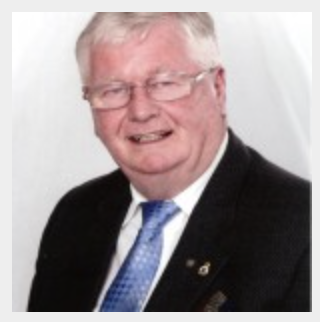
Bio:
Dr. Bill Pomfret of Safety Projects International Inc who has a training platform, said, “It’s important to clarify that deskless workers aren’t after any old training. Summoning teams to a white-walled room to digest endless slides no longer cuts it. Mobile learning is quickly becoming the most accessible way to get training out to those in the field or working remotely. For training to be a successful retention and recruitment tool, it needs to be an experience learner will enjoy and be in sync with today’s digital habits.