What does it mean to live a good life? For centuries, philosophers, scientists and people of different cultures have tried to answer this question. Each tradition has a different take, but all agree: The good life is more than just feeling good − it’s about becoming whole.
More recently, researchers have focused on the idea of flourishing, not simply as happiness or success, but as a multidimensional state of well-being that involves positive emotions, engagement, relationships, meaning and accomplishment − an idea that traces back to Aristotle’s concept of “eudaimonia” but has been redefined within the well-being science literature.
We are a group of psychological scientists, social scientists and epidemiologists who are all contributors to an international collaboration called the Global Flourishing Study. The goal of the project is simple: to find patterns of human flourishing across cultures.
Do people in some countries thrive more than others? What makes the biggest difference in a person’s well-being? Are there things people can do to improve their own lives? Understanding these trends over time can help shape policies and programs that improve global human flourishing.
 What does the flourishing study focus on?
The Global Flourishing Study is a five-year annual survey of over 200,000 participants from 22 countries, using nationally representative sampling to understand health and well-being. Our team includes more than 40 researchers across different disciplines, cultures and institutions.

With help from Gallup Inc., we asked people about their lives, their happiness, their health, their childhood experiences, and how they feel about their financial situation.
The study looks at six dimensions of a flourishing life:
- Happiness and life satisfaction: how content and fulfilled people feel with their lives.
- Physical and mental health: how healthy people feel, in both body and mind.
- Meaning and purpose: whether people feel their lives are significant and moving in a clear direction.
- Character and virtue: how people act to promote good, even in tough situations.
- Close social relationships: how satisfied people are with their friendships and family ties.
- Financial and material stability: whether people feel secure about their basic needs, including food, housing and money.
We tried to quantify how participants are doing on each of these dimensions using a scale from 0 to 10. In addition to using the Secure Flourish measure from Harvard’s Human Flourishing Program, we included additional questions to probe other factors that influence how much someone is flourishing.
For example, we assessed well-being through questions about optimism, peace and balance in life. We measured health by asking about pain, depression and exercise. We measured relationships through questions about trust, loneliness and support.
Who is flourishing and why?
Our first wave of results reveals that some countries and groups of people are doing better than others.
 We were surprised that in many countries young people are not doing as well as older adults. Earlier studies had suggested well-being follows a U-shape over the course of a lifespan, with the lowest point in middle age. Our new results imply that younger adults today face growing mental health challenges, financial insecurity and a loss of meaning that are disrupting the traditional U-shaped curve of well-being.

Married people usually reported more support, better relationships and more meaning in life.

People who were working – either for themselves or someone else – also tended to feel more secure and happy than people who were seeking jobs.
People who go to religious services once a week or more typically reported higher scores in all areas of flourishing – particularly happiness, meaning and relationships. This finding was true in almost every country, even very secular ones such as Sweden.
It seems that religious communities offer what psychologists of religion call the four B’s: belonging, in the form of social support; bonding, in the form of spiritual connection; behaving, in the cultivation of character and virtue through the practices and norms taught within religious communities; and believing, in the form of embracing hope, forgiveness and shared spiritual convictions.
But some people who attend religious services also report more pain or suffering. This correlation may be because religious communities often provide support during hard times, and frequent attendees may be more attentive to or more likely to experience pain, grief or illness.

Your early years shape how you do later in life. But even if life started off as challenging, it doesn’t have to stay that way. Some people who had difficult childhoods, having experienced abuse or poverty, still found meaning and purpose later as adults. In some countries, including the U.S. and Argentina, hardship in childhood seemed to build resilience and purpose in adulthood.

Globally, men and women report similar levels of flourishing. But in some countries there are big differences. For example, women in Japan report higher scores than men, while in Brazil, men report doing better than women.
Where are people flourishing most?
Some countries are doing better than others when it comes to flourishing.

Indonesia is thriving. People there scored high in many areas, including meaning, purpose, relationships and character. Indonesia is one of the highest-scoring countries in most of the indicators in the whole study.
Mexico and the Philippines also show strong results. Even though these countries have less money than some others, people report strong family ties, spiritual lives and community support.
Japan and Turkey report lower scores. Japan has a strong economy, but people there report lower happiness and weaker social connections. Long work hours and stress may be part of the reason. In Turkey, political and financial challenges may be hurting people’s sense of trust and security.
One surprising result is that richer countries, including the United States and Sweden, are not flourishing as well as some others. They do well on financial stability but score lower in meaning and relationships. Having more money doesn’t always mean people are doing better in life.
In fact, countries with higher income often report lower levels of meaning and purpose. Meanwhile, countries with higher fertility rates often report more meaning in life. These findings show that there can be a trade-off. Economic progress might improve some things but weaken others.
The big picture
The Global Flourishing Study is helping us see that people all over the world want many of the same basic things: to be happy, healthy, connected and safe. But different countries reach those goals in different ways. There is no one-size-fits-all answer to flourishing. What it means to flourish can look different from place to place and from one person to another.
One challenge with the Global Flourishing Study is that it uses the same set of questions in all 22 countries. This method, known as an etic approach, helps us compare results across cultures. But it can miss the nuance and local meanings of flourishing. What brings happiness or purpose in one country or context might not mean the same thing in another.
We consider this study to be a starting point. It opens the door for more emic studies – research that uses questions and ideas that fit the values, language and everyday life of specific cultures and societies. Researchers can build on this study’s findings to expand how we understand and measure flourishing around the world.
(C) The Conversation

Bio:
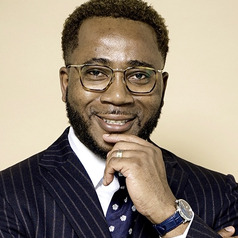 Victor Counted, Ph.D., is Associate Professor of Psychology and Director of the Office of Research and Sponsored Programs at Regent University in Virginia Beach, Virginia, where he also leads the Christian Flourishing Science Lab as Director. Counted is a Faculty Affiliate of Harvard University’s Human Flourishing Program and a Fellow of the International Society for Science and Religion. He has a PhD in Health Psychology from Western Sydney University, Australia, and a second PhD in Psychology of Religion from the University of Groningen, Netherlands. He serves as Associate Editor of the Journal of Positive Psychology and Editor of Springer’s Religion, Spirituality, and Health: A Social Scientific Approach book series. Counted has authored over 80 peer-reviewed scientific and scholarly publications that examines how psychological processes—particularly those related to social, spiritual, environmental, and neurological dimensions—shape human flourishing across cultures. His work explores how these dimensions interact to support, sustain, and strengthen health and well-being and how disruptions to these processes can lead to stressors or challenges that require adaptive responses. He also utilizes a unique integrative flourishing framework that integrates psychological science and practice with cross-cultural healthcare practices to develop evidence-based and theoretically-driven research interventions that promote health and well-being for individuals and communities. You can learn more about his 4-stage framework of the psychology of human flourishing on his page: https://vcounted.com/research/
 Byron Johnson is Distinguished Professor of the Social Sciences at Baylor University and is the founding director of the Baylor Institute for Studies of Religion (ISR). Johnson is a faculty affiliate of the Human Flourishing Program at Harvard University, and is co-executive director of the Center for Faith and the Common Good as well as Visiting Distinguished Professor in the School of Public Policy at Pepperdine University. In 2016, he co-founded the Religious Freedom Institute, based in Washington, DC.
 Tyler J. VanderWeele, Ph.D., is the John L. Loeb and Frances Lehman Loeb Professor of Epidemiology in the Departments of Epidemiology and Biostatistics at the Harvard T.H. Chan School of Public Health, and Director of the Human Flourishing Program and Co-Director of the Initiative on Health, Religion and Spirituality at Harvard University. He holds degrees from the University of Oxford, University of Pennsylvania, and Harvard University in mathematics, philosophy, theology, finance, and biostatistics. His methodological research is focused on theory and methods for distinguishing between association and causation in the biomedical and social sciences and, more recently, on psychosocial measurement theory. His empirical research spans psychiatric and social epidemiology; the science of happiness and flourishing; and the study of religion and health. He is the recipient of the 2017 Presidents’ Award from the Committee of Presidents of Statistical Societies (COPSS). He has published over four hundred papers in peer-reviewed journals; is author of the books Explanation in Causal Inference (2015), Modern Epidemiology (2021), and Measuring Well-Being (2021); and he also writes a monthly blog posting on topics related to human flourishing for Psychology Today.