
#146 – HOW SAMPLE SIZE AFFECTS DECISION MAKING – FRED SCHENKELBERG

Featured

ABC FredSample Size Determination

When planning for quality or reliability testing, an often posed question is: How many samples do you need? The trite answer is: Just as many samples as you need and not one more. A better answer is: Enough samples to make the right decision. The realistic expectation is : You will not have enough samples. Continue reading
#145 – GATHERING DATA WITH NEVADA CHARTS – FRED SCHENKELBERG

Featured

ABC FredGathering Field Failure Data

A common and rather poor technique to gather field data is to count the number of returns by week or month. This can provide a graph showing the number of returns over time. However, it hides useful information you need to understand your field failures.

Let’s take a look at a way to gather the same field failure data and retain the critical information necessary for time-to-failure analysis. Continue reading

#144 – GATHERING FIELD DATA FOR IMPROVING RELIABILITY – FRED SCHENKELBERG

Featured

ABC FredImportance of Field Data

Customers experience product failures. Understanding these failures that occur in the hands of customers is an essential undertaking. We need this information to identify increasing failure rates, component batch or assembly errors, or design mistakes. Continue reading

#143 – TRACKING AND REPORTING FIELD FAILURES – FRED SCHENKELBERG

Featured

ABC FredComplications When Tracking Field Data

Fielded products fail day by day. Customers report these failures, generally seeking a way to remedy this issue. Gathering the reported or returned products or confirmed failures is common practice.

Depending on the product, a simple replacement or exchange may suffice. For other products, repair or a refund may be appropriate. In general, and not always, when a product fails in the hands of a customer, the organization designing, manufacturing, and distributing the product learns of the failure. Continue reading

#142 – THE STRESS – STRENGTH CONCEPT IN PRACTICE – FRED SCHENKELBERG

Featured

Stress–Strength Concept

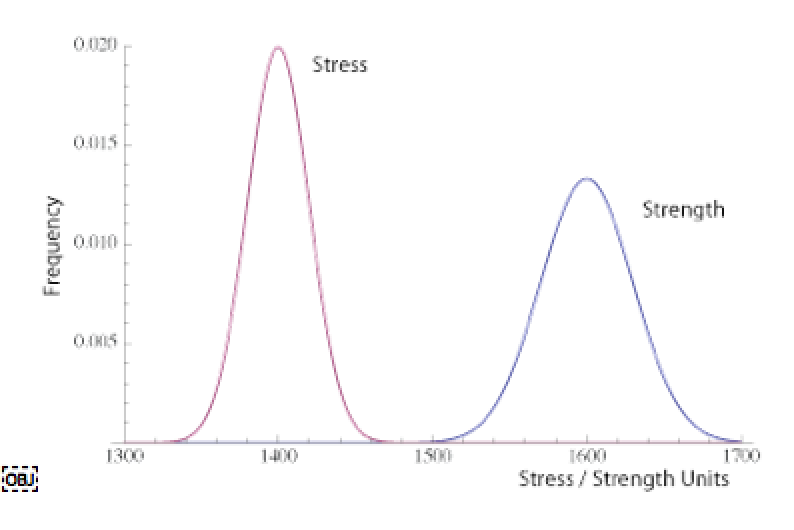
ABC FredIdeally, in every design of every component the stress–strength relationship looks like this figure:AAA 1You will notice that the stress is well below the strength. This implies there is very little chance of failure as a result of the element being overstressed. Also, ideally, we fully characterize all stresses and all strengths for each element of a product. This is generally difficult to accomplish and it is rarely done to that extent. Continue reading